

How to Become a Skilled Funded Trader
📈 Discover the path to becoming a skilled funded trader in South Africa. Learn key skills, funding options, and how to navigate trading challenges effectively.
Edited By
Amelia Scott
MetaTrader 4 (MT4) and MetaTrader 5 (MT5) are two of the most popular trading platforms worldwide, well-known among traders in South Africa and beyond. Although they share a familiar interface and some functionalities, they differ significantly in their capabilities and market focus.
MT4 has long been the go-to choice for forex trading, prized for its simplicity, reliability, and extensive support for custom indicators and automated trading through Expert Advisors (EAs). For many local traders mainly dealing with currency pairs, MT4 remains a solid platform.
On the other hand, MT5 was developed as a more advanced platform that caters to a wider range of financial markets including forex, stocks, commodities, and futures. It offers more technical analysis tools and additional order types, making it better suited for traders who want to explore diversified asset classes or more complex strategies.
South African traders often weigh their choice between these platforms based on factors like market access, technical analysis capabilities, and broker compatibility. For example, while many brokers in South Africa still provide MT4, especially for retail forex, others have shifted to MT5 for its improved multi-asset functionality and faster execution.
Choosing between MT4 and MT5 largely depends on your trading goals and the markets you want to participate in rather than just the platform’s interface.
Here’s what you’ll find in this article:
Platform capabilities and usability
Supported market types
Variety of order execution and trading options
Technical analysis tools included
Suitability for South African trading conditions
By the end, you’ll have clear, actionable insights to make a practical choice aligned with your trading style, whether you stick with MT4’s familiarity or explore MT5’s enhancements.
Getting a solid overview of MetaTrader 4 (MT4) and MetaTrader 5 (MT5) is key to understanding which platform serves your trading needs better. Both platforms are widely used by traders around the world, including here in South Africa, but they come with differences that can impact your trading experience, from the kinds of markets you can access to the tools available for analysis.
MetaTrader 4 started off in the mid-2000s primarily as a forex trading platform. It was designed with simplicity and speed in mind, targeting retail forex traders who needed a reliable system to place trades and analyse currency markets. Many South African traders still prefer MT4 because it offers a straightforward interface and plenty of community-developed tools like Expert Advisors (automated trading bots) and custom indicators.
MetaTrader 5 arrived several years later with the aim of broadening the scope beyond forex. This newer iteration supports stocks, commodities, indices, and even exchange-traded funds (ETFs). The added market coverage means traders who want to diversify their portfolios or access additional instrument types find MT5 more appealing. Plus, it offers extra timeframes and improved technical analysis features, catering to those who want a deeper insight into the markets.
MT4 runs on a 32-bit architecture, while MT5 operates as a 64-bit system. This difference means MT5 can handle more data faster and supports more complex trading operations without slowing down. For example, when running several charts or carrying out high-frequency trading strategies, MT5’s architecture tends to provide smoother performance. That said, MT4 remains efficient and lightweight, suitable for traders with less demanding setups or those on older computers.
While MT4 has a relatively basic and functional interface, MT5 offers a more modern and customisable layout. MT5 introduces additional chart types and allows the trader to see the market depth—giving a better picture of supply and demand. For South African traders concerned about data costs or slower connections, the simplicity of MT4’s interface might actually be a plus. Still, MT5’s enhanced visuals and features are great if you prefer a more detailed dashboard.
Understanding these foundational differences helps you pick the platform best suited to your trading style and technical needs. Whether you value speed and simplicity or broader market access and advanced tools, knowing the platform's origins and structure guides your decision.
Understanding market access and the range of instruments available is essential when choosing between MetaTrader 4 (MT4) and MetaTrader 5 (MT5). This impacts what you can trade and how flexible your portfolio becomes. South African traders especially benefit from knowing each platform’s strengths in accessing various asset classes.
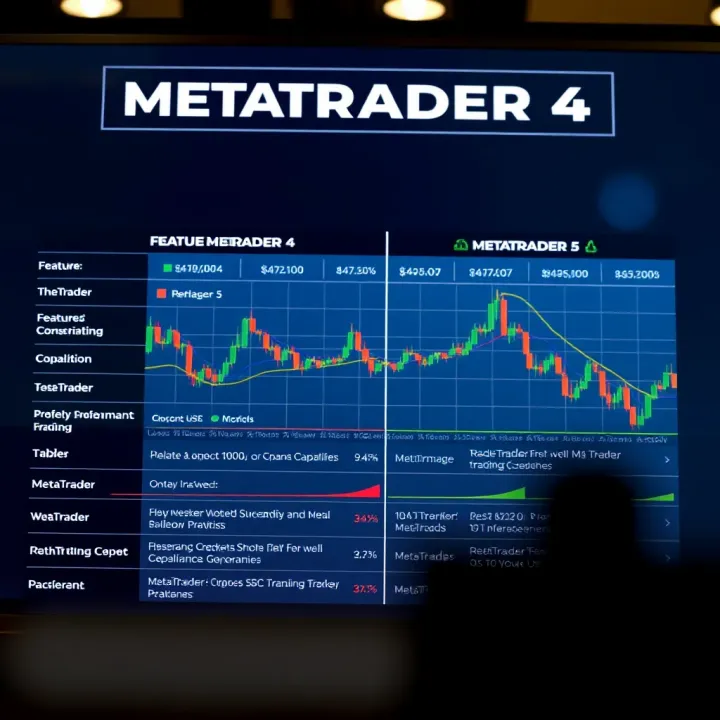
Forex focus: MT4’s main strength lies in its forex trading capabilities. It was developed during the early 2000s primarily for retail forex traders, so it supports a wide selection of currency pairs. Many South African brokers offer MT4 mainly for forex, which suits traders who concentrate on this market without needing other asset types.
Forex trading on MT4 is straightforward, with reliable execution and plenty of automated indicators. For example, a Johannesburg-based trader focusing on the USD/ZAR pair can easily monitor and execute trades using MT4’s familiar setup. However, the forex-specialised nature may limit diversification for those looking beyond currencies.
Limited additional instruments: While MT4 allows trading some CFDs on indices and commodities, the choices are generally restricted compared to more recent platforms. Traders looking for exposure to broader markets like stocks or futures may find MT4's offerings too narrow.
This limits South African traders who want to experiment with commodities like gold or platinum, local indices such as the FTSE/JSE Top 40, or global shares. As a result, MT4 is commonly the platform of choice for those who prefer simplicity and focus rather than variety.
Access to stocks, commodities, indices: MT5 was designed to broaden market access well beyond forex. It supports a larger variety of asset classes including stocks, commodities, indices, and even cryptocurrencies through CFDs. For South African traders, this means the ability to build a more diverse portfolio all within one platform.
For instance, an investor wanting to trade not just USD/ZAR but also commodities like gold or the JSE Top 40 can do so without switching software. This integrated approach saves time and reduces the hassle of juggling multiple platforms.
Support for exchange-traded instruments: Besides CFDs, MT5 supports direct trading of exchange-traded instruments with features like depth of market (DOM) data. This is a significant step up for those wanting transparent price information and tight spreads typical of exchange trading.
For example, a trader using MT5 can access listed shares on the Johannesburg Stock Exchange (JSE) or commodities traded on international exchanges. This provides more precise order execution and advanced trading strategies, well-suited for professional and retail traders seeking greater market granularity.
When deciding between MT4 and MT5, consider the type and range of markets you want to trade. MT4 remains strong for pure forex trading, while MT5 offers wider market access crucial for diversified portfolios, especially as South African markets evolve.
In summary, MT4 caters well to forex traders focusing on currency trading, with simpler instrument offerings. MT5, on the other hand, extends accessibility to a broader spectrum of financial products including stocks and commodities, making it better suited for multi-asset trading strategies in South Africa today.
Trading features and order types shape how effectively a trader can navigate the markets. These options dictate not only what trades can be opened or closed, but also how risk is managed and profits locked in. For South African traders who must contend with market volatility and intermittent connectivity, understanding the available order types and execution methods on MetaTrader platforms is vital for consistent performance.
MetaTrader 4 (MT4) offers basic but reliable order execution options tailored mainly for forex trading. It supports market orders, which let you buy or sell instantly at the best available price, helping traders catch swift market movements. For instance, if the South African Rand suddenly spikes due to unexpected economic data, a market order ensures the trade is executed immediately.
Alongside market orders, MT4 provides various pending orders such as buy limit, sell limit, buy stop, and sell stop. These allow traders to automate entry at predetermined price levels without needing to monitor the market constantly. Say you expect the rand to rebound after dipping to R14.50 against the dollar; a pending buy limit order can be set up to enter the trade automatically at that level.
Modification and cancellation of orders in MT4 are straightforward. Traders can update stop loss or take profit levels on existing positions, or cancel pending orders if market conditions change. For example, if the rand nears an economic announcement and you want to reduce exposure, you can quickly raise your stop loss or cancel a pending order before it triggers. This flexibility provides vital control during unpredictable market swings.
MetaTrader 5 (MT5) expands on MT4's basics with advanced order types such as buy stop limit and sell stop limit. These let traders enter the market with more precise conditions by combining stop and limit orders. This can help avoid slippage and secure better entry prices. For a South African trader dealing with often volatile commodities, this precision can be the difference between profit and loss.
Another feature unique to MT5 is access to market depth — also called Level 2 pricing. This shows the volume of buy and sell orders at different price levels, offering a clearer picture of market liquidity and potential price movement. For example, a trader watching the gold market can gauge how much buying interest exists at various prices, helping to decide when to enter or exit a position. Market depth can be especially useful in illiquid conditions common in smaller South African brokers.
Understanding these trading features and nuances in order types is critical for making informed decisions and managing risk effectively. While MT4 offers a solid foundation suitable for many forex traders, MT5’s added flexibility and detailed market insight make it a strong choice for those requiring greater precision.
Both platforms serve different needs, so knowing these differences arms you to pick the right tool for your trading style and market focus.
Technical analysis plays a critical role in trading by helping traders interpret price movements and market trends based on historical data. Indicators, which are tools for statistical calculations on price or volume, provide tangible signals to inform decisions on entry and exit points. This section highlights how MetaTrader 4 (MT4) and MetaTrader 5 (MT5) handle technical analysis and indicators, which can significantly impact a trader's strategy.
MT4 offers a solid suite of built-in indicators such as Moving Averages, Relative Strength Index (RSI), and Bollinger Bands. These indicators cover most basic analyses traders need for forex trading and some other markets. For example, an MT4 user could apply the RSI to identify overbought conditions in the EUR/USD currency pair, helping to time a sell position.
Beyond the standard toolkit, MT4 shines with its support for custom indicators and Expert Advisors (EAs). Traders and developers can write their own indicators using the MQL4 programming language, tailoring tools to particular needs. For instance, some traders program EAs to automate trades based on specific indicator signals, effectively running a trading robot. This customisability has made MT4 a favourite among algorithmic traders who prefer hands-off management.
MT5 builds on MT4’s foundation with more indicators and timeframes available out of the box. It includes additional tools like the Ichimoku Cloud and more sophisticated oscillators, alongside the option to analyse charts on 21 different timeframes, compared to MT4’s nine. This richer time resolution lets traders zoom in or out to see finer or broader market moves, aiding both short-term scalpers and long-term investors.
Moreover, improved charting tools in MT5 offer a more flexible and visually clear environment. Features such as graphical objects for trend lines, shapes, and Fibonacci retracements come with easier deployment and more customisation options. Traders can also open multiple charts with different instruments or timeframes side by side, making it easier to monitor diverse markets simultaneously. For example, a trader monitoring both commodity futures and currency pairs benefits from the ability to watch interconnected price action more efficiently.
Advanced charting and expanded indicators make MT5 a better fit for traders who rely heavily on technical analysis and demand in-depth market insights.
In short, while MT4 provides dependable and customisable analysis tools that suit most forex traders, MT5 offers more variety and depth in technical indicators and charting capabilities, supporting broader trading strategies and multi-asset analysis.
South African traders face unique challenges and opportunities in the financial markets, making the choice between MetaTrader 4 (MT4) and MetaTrader 5 (MT5) particularly relevant. Both platforms cater to different trading styles and market access, but local factors such as broker availability, data costs, and connectivity play vital roles in determining which platform suits individual needs.
Several prominent South African brokers provide access to both MT4 and MT5, including names like ForexTime (FXTM), IG, and HotForex. MT4 remains popular due to its long-standing reliability and simpler interface, especially among forex traders. Meanwhile, MT5 gains traction with brokers expanding into multi-asset offering, giving traders access to stocks and commodities alongside forex.
Choosing a broker often depends on the trading instruments on offer and customer service, but platform compatibility is crucial too. For example, MT4 suits traders focusing mainly on forex and CFDs, while MT5 supports those wanting a wider market choice. Brokers like IG also offer localised platforms with MT5 capabilities, allowing South Africans to trade directly in global equities and futures.
Data costs in South Africa remain a real hurdle for active traders, especially when running trading software continuously. MT4’s lighter data demands can be more suitable for traders with limited or expensive internet bundles. It generally requires less bandwidth and may perform better on slower or unstable connections common in some areas.
On the other hand, MT5’s richer data feeds and expanded features demand more stable connectivity and increased data usage. Traders experiencing frequent disruptions or using prepaid data should factor this in before choosing MT5. Some brokers offer optimised mobile versions of both platforms, which help reduce data use and improve responsiveness, but the underlying conditions still influence overall experience.
For South African traders prioritising forex, MT4 remains the go-to choice for many. Its straightforward interface, broad broker support, and proven reliability make it well suited for those who mainly trade currency pairs. Many local traders appreciate how MT4 handles common order types and supports popular Expert Advisors (automated trading bots) tailored to forex strategies.
That said, MT5 offers advanced order types and additional timeframes, which some forex traders find beneficial for more sophisticated strategies. But if your trading strategy relies heavily on forex alone, the simplicity and speed of MT4 might outweigh MT5’s expanded features.
If you’re interested in trading beyond forex, MT5 steps up considerably. It supports a wider range of financial instruments, including shares, commodities, indices, futures, and options. This makes it ideal for South African traders looking to diversify their portfolios without juggling multiple platforms.
Additionally, MT5’s ability to display market depth can offer better insights when trading more complex assets, helping traders make more informed decisions. For example, a trader wanting exposure to commodity prices like gold or local equity indices can benefit from MT5’s enhanced features.
Ultimately, the right platform hinges on your trading focus and local realities. While MT4 fits those who want simplicity, low data usage, and forex-centric trading, MT5 appeals to traders seeking broader market access and advanced tools, provided they have reliable connectivity and can handle the additional data costs.
📈 Discover the path to becoming a skilled funded trader in South Africa. Learn key skills, funding options, and how to navigate trading challenges effectively.

Discover the richest forex trader in South Africa🇿🇦, their winning strategies📈, challenges, legal tips⚖️, and impact on local traders💡.

Discover how the richest forex trader made their fortune 💰, their top strategies 📈, and what sets them apart in the forex world 🌍. Learn from the best!

Discover funded trader programs explained: how they work, pros & cons, top providers, and tips for South African traders to start successfully 📈💼🌍
Based on 13 reviews