

Rand to Dollar Exchange Rate Outlook
📈 Explore key factors shaping the Rand to Dollar exchange rate and get insights on economic trends and market shifts impacting South Africa’s forex scene.
Edited By
Amelia Scott
Understanding the EUR/GBP currency pair is vital for traders and investors aiming to navigate global forex markets with precision. This pairing reflects the exchange rate between the euro, used by 19 European Union countries, and the British pound, the United Kingdom’s national currency. Movements in EUR/GBP can signal shifts in economic strength between the Eurozone and the UK, making it a popular focus for those tracking international market trends.
Recent months have seen both currencies respond to various pressures. For instance, Eurozone inflation data showing stubborn price rises has influenced ECB (European Central Bank) policy decisions, while Brexit-related developments and UK banking sector stability continue to affect the pound’s valuation. These headwinds and tailwinds produce a dynamic environment for the pair.

Tracking economic indicators such as GDP growth, inflation rates, and employment figures from both regions provides the clearest clues about possible EUR/GBP movements. For example, stronger-than-expected UK jobs data tends to lift the pound, while Eurozone industrial output slowdowns may weaken the euro.
Traders should also keep an eye on central bank actions—the ECB and Bank of England’s interest rate changes and forward guidance often sway the pair’s direction. On top of this, geopolitical events, such as trade negotiations or energy supply concerns, can cause sudden volatility.
Key points to watch include:
Eurozone inflation trends and ECB policy response
UK economic growth and Bank of England rate decisions
Political developments in Europe and the UK
Market sentiment driven by global risk appetite
By focusing on these indicators and understanding their interplay, investors and financial advisors can form more accurate forecasts of EUR/GBP price action. This helps to manage risk and seize opportunities, especially important for South African traders who deal with currency conversions involving rand and international currencies.
In the sections that follow, we will explore recent market data, influential economic factors, and technical analysis to give a full picture of the EUR/GBP outlook in the months ahead.
Importance for European trade: The EUR/GBP currency pair plays a key role in facilitating trade between the Eurozone and the United Kingdom. Since the UK remains one of the Eurozone's largest trading partners, exchange rate fluctuations directly impact the prices of imports and exports between these regions. For instance, a weaker pound relative to the euro often makes UK exports to Europe more competitive, which can boost businesses reliant on cross-border trade like automotive manufacturers or food producers. Traders following the pair closely can capitalise on these shifts by monitoring trade balance announcements and tariff changes.
Relevance to UK economic ties: Post-Brexit, the EUR/GBP pair continues to reflect the evolving economic relationship between the UK and its continental neighbours. Changes in UK government policies, such as trade agreements or regulatory adjustments, often feed through the currency markets quickly. For example, uncertainties around Northern Ireland protocols or customs union talks have caused notable swings in the pair. This means traders need to stay informed about UK-related political developments to anticipate short-term volatility, particularly those investing in British equities or funds with exposure to UK-European trade.
Impact on South African trade and investment: South Africa’s exposure to both the UK and Europe makes EUR/GBP a relevant watchpoint for local investors and multinational companies. South African firms with operations or supply chains tied to the UK or Eurozone may see their input costs shift as the pair fluctuates. Consider a local importer buying European equipment priced in euros but invoiced via the UK—exchange rate changes here affect the Rand value of the purchase. Additionally, financial advisors working with clients holding international portfolios must factor in EUR/GBP trends when managing currency risk, especially given the Rand's own volatility.
Long-term trends: Historically, the EUR/GBP exchange rate has displayed moderate swings within a range often influenced by broader economic cycles. Over the past two decades, periods of UK economic strength relative to the Eurozone have tightened the spread, while crises like the 2008 financial crash widened it considerably. For investors, understanding these long-term tendencies helps frame the potential for mean reversion when the pair strays far from historical averages.
Significant past fluctuations: Major political and economic shifts have triggered sharp moves in EUR/GBP. Brexit referendum results in 2016 saw the pound plunge while the euro held steady, causing a rapid widening of the spread. Similarly, ECB monetary easing rounds or UK interest rate hikes have delivered pronounced reactions. Traders looking for entry points often examine these past volatility episodes to know when momentum may continue or when risk appetite could cool.
Key events shaping the pair: Several landmark events have shaped EUR/GBP's course. The introduction of the euro in 1999 replaced legacy currencies like the Deutsche Mark and British pound old forms, unifying the Eurozone’s currency risk. Brexit negotiations introduced an extra layer of uncertainty, with negotiation milestones regularly rattling markets. More recently, pandemic-related stimulus and the Bank of England’s policy shifts have added fresh dynamics. Keeping an eye on such events aids market participants in anticipating sudden moves and adapting strategies accordingly.
Monitoring the EUR/GBP pair is essential for anyone engaged in European-UK trade or international investing, given how sensitive exchange rates are to policy changes and economic shifts.
Understanding the economic forces behind EUR/GBP movements helps traders and investors anticipate risks and opportunities. Currency values don’t shift randomly; they respond to clear economic signals. For instance, stronger economic growth or tighter monetary policy in one region can boost its currency relative to the other. This section breaks down key economic factors shaping this pair, offering a practical lens for market participants.
GDP growth and inflation are core metrics showing the health of the Eurozone economy. When GDP grows steadily, it signals stronger demand for goods and services, encouraging investment and often lifting the euro. Inflation, on the other hand, connects directly to purchasing power and monetary policy decisions. For example, if inflation rises above the European Central Bank's (ECB) target of around 2%, the ECB might tighten policy, which can strengthen the euro. Conversely, sluggish growth with low inflation may keep the euro under pressure.
ECB monetary policy updates are closely watched because they guide interest rates and liquidity in the Eurozone. Recent ECB measures, such as adjusting rates or its asset purchase programmes, influence market expectations. Suppose the ECB signals a rate hike or tapers stimulus sooner than expected; the euro could rally as traders anticipate higher returns. In contrast, dovish policies or delays in tightening might weaken the currency. Especially in volatile times, even subtle wording changes in ECB statements can trigger sharp moves in EUR/GBP.
Political developments in member states also weigh on the pair. Election outcomes, coalition talks, or policy shifts in major economies like Germany, France, or Italy can affect market confidence. For instance, signs of political instability or disagreements over budgets can trigger euro weakness. A real-world example is the Italian government crises that have historically caused temporary depreciation. Traders need to monitor these developments as they add layers of uncertainty.
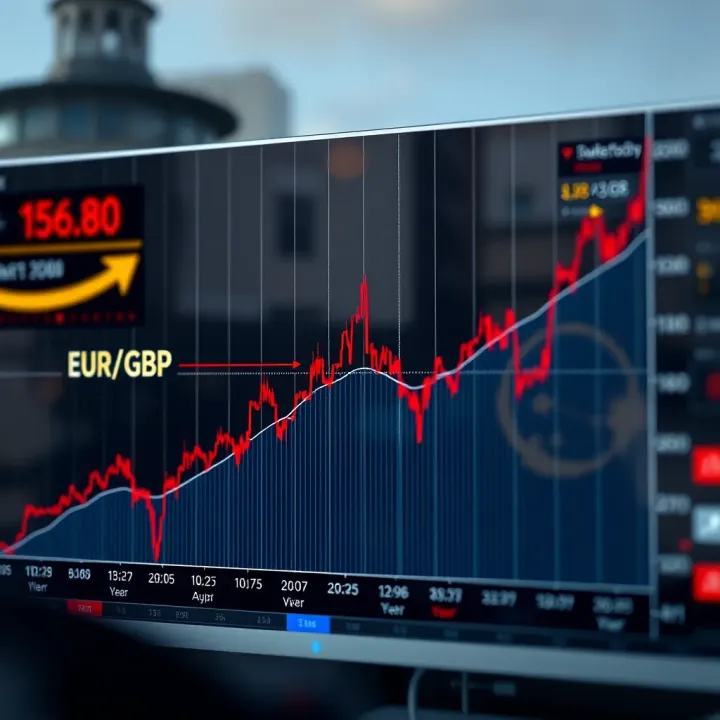
Boris Johnson’s post-Brexit policies and impact set the tone for the pound’s outlook after the UK left the European Union. His government’s approach to trade agreements, regulation, and fiscal spending shapes economic prospects. For example, trade frictions with the EU or increased public spending to stimulate growth push forex markets to reassess the pound’s value. Understanding how these policies evolve helps traders gauge potential currency shifts in EUR/GBP.
Bank of England interest rate decisions remain a key driver of the British pound’s strength. The BoE adjusts its base rate to manage inflation and growth, affecting bond yields and capital flows. A recent rate hike aimed at curbing inflation tends to boost the pound as investors seek higher returns. On the flip side, hints of rate cuts or economic slowdown can weigh on sterling. Traders watching the BoE meetings keenly position themselves ahead of announcements.
Labour market and inflationary pressures reveal underlying economic resilience or stress in the UK. A tight labour market with low unemployment usually leads to wage increases, supporting consumer spending and inflation. If inflation runs hot, the BoE may tighten monetary policy, strengthening the pound. However, persistent inflation without wage growth can squeeze households, dampening economic momentum and pressuring sterling. Keeping an eye on employment figures and inflation rates helps market participants assess the pound’s near-term direction.
Monitoring these economic factors side-by-side equips traders and investors with a clearer picture of what moves EUR/GBP. Real-time updates on GDP, policymaker remarks, and political news are vital inputs to sound decision-making.
By focusing on concrete, up-to-date economic signals from both the Eurozone and the UK, you stay ahead of potential swings in the currency pair. These insights extend beyond theory — they reflect the practical realities traders face in fast-moving forex markets.
Understanding current market sentiment and technical patterns is key to navigating the EUR/GBP pair effectively. These elements reflect how traders feel about the currency pair right now and help anticipate potential price directions, which is crucial for timing entry and exit points.
Short and medium-term trends show how the EUR/GBP pair has behaved over weeks to a few months. For example, in recent months, the pound has seen some strengthening against the euro, largely due to Bank of England interest rate hikes. Traders watching these trends can spot whether a current move is part of a longer run or just a brief blip, influencing decisions on holding or closing positions.
Reaction to global risk events also weighs heavily on EUR/GBP. Events like geopolitical tensions or shifts in the US Federal Reserve’s rate policy often cause investors to shift funds between safe havens and riskier assets, impacting EUR/GBP volatility. During the recent escalation in Eastern Europe, the euro softened as traders sought refuge in the pound, reflecting a typical flight-to-safety response that traders need to anticipate.
Volatility compared to other major pairs helps place EUR/GBP within the broader forex market context. Generally, EUR/GBP shows lower volatility than pairs like EUR/USD or GBP/USD, making it attractive for more risk-averse traders or those seeking steadier moves. However, on days with Bank of England or European Central Bank announcements, volatility can spike, signalling opportunities as well as risks.
Support and resistance zones represent prices where EUR/GBP tends to pause or reverse. For instance, recent support around 0.8500 has held firm, while resistance near 0.8800 remains a barrier. Recognising these zones helps traders set realistic stop-loss and take-profit targets, crucial for managing risk and reward.
Moving averages and momentum indicators like the 50-day and 200-day moving averages offer insight into the pair’s direction and strength. When the shorter moving average crosses above the longer one, it usually signals an upward trend. Momentum indicators such as the Relative Strength Index (RSI) highlight whether the pair is overbought or oversold, guiding timing for entries or exits.
Chart patterns indicating potential moves — triangles, head and shoulders, or flags — often hint at trend continuation or reversal. For example, a symmetrical triangle forming over weeks could imply an impending breakout, allowing savvy traders to position ahead. Ignoring such patterns can mean missing early signals of sharp moves, so keeping an eye on daily charts pays off.
Keeping track of market sentiment and technical patterns arms traders with timely, actionable insights that go beyond fundamental factors. It sharpens awareness of volatility spikes, trend shifts, and key price levels essential for effective decision-making in the EUR/GBP market.
Understanding forecast scenarios for the EUR/GBP pair is vital for traders and investors aiming to navigate the constantly shifting currency markets. These scenarios act as guideposts, showing possible directions the exchange rate might take due to underlying economic, political, and market dynamics. For South African traders watching this pair alongside rand fluctuations, a clear outlook helps in planning hedging strategies and taking advantage of currency movements.
The base case outlook suggests the EUR/GBP will likely trade within a relatively narrow band, around 0.85 to 0.88, as both economies adjust post-Brexit and respond to inflationary pressures. This range offers a practical framework for managing currency risk without expecting wild swings. For example, importers and exporters can budget more confidently knowing the exchange rate won't suddenly deviate by large margins.
Several factors underpin this steady state: cautious monetary policies from both the European Central Bank (ECB) and Bank of England, and moderate economic growth in both regions. For instance, neither side is expected to make abrupt interest rate moves due to persistent inflation concerns but with balanced economic recovery. This steadiness tends to reduce market volatility, benefiting longer-term investors who prefer predictable trends over sudden surprises.
Despite the hopeful outlook, risks linger. Political uncertainties in key EU nations or unexpected shifts in UK fiscal policy could unsettle the pair. Additionally, global risk factors like US interest rate decisions or geopolitical tensions may disrupt markets, causing volatility spikes. Traders must keep an eye on these developments to avoid getting caught off guard.
Stronger sterling scenarios could materialise if the UK delivers sustained economic growth amid improved post-Brexit trade agreements or a quicker-than-expected slowdown in inflation. A sharper rise in the Bank of England’s interest rates compared to the ECB would also boost the pound, attracting capital inflows.
If the UK government announces measures that enhance business confidence or tax reforms encouraging investment, the pound might gain further ground. Meanwhile, weaker economic data from the Eurozone, such as sluggish GDP growth or persistent political discord, could tip the balance further in sterling’s favour.
A stronger pound makes UK imports cheaper but can hamper exporters by making their goods more expensive abroad. South African investors with holdings in UK assets should consider currency hedges to protect returns. Conversely, businesses importing from the UK might see cost savings, a practical upside to note.
The euro could strengthen if the ECB adopts a more hawkish stance or if Eurozone economies demonstrate stronger recovery than expected. For example, robust industrial output or higher-than-anticipated inflation prompting tighter policy might push the euro higher.
Unexpected shocks like significant UK political disruption or fiscal instability could weaken sterling, indirectly boosting the euro. Similarly, easing global risk sentiment benefiting European exports may also underpin the euro’s rise.
A stronger euro against sterling shifts the trading landscape, making EU goods relatively pricier but improving South African rand exposure to euro-linked assets. Currency traders need to watch how this dynamic affects cross-border investments and adjust strategies accordingly.
Monitoring the EUR/GBP forecasts closely allows market participants to respond effectively, whether hedging exposures or seizing trading opportunities shaped by economic realities and policy shifts.
The outlook should not be taken as fixed but as a roadmap highlighting what might unfold, inviting active vigilance and flexible decision-making.
Understanding the practical implications of EUR/GBP movements is vital for traders and investors aiming to shield themselves from unexpected shifts and capitalise on opportunities. This section breaks down actionable strategies and considerations, focusing on tools and perspectives especially relevant within the South African context. The aim is to equip market players with hands-on insights that reflect both global currency trends and local realities.
Hedging approaches play a pivotal role in managing potential losses from adverse currency moves. For example, a South African importer relying on EUR/GBP payments could use natural hedging by balancing receivables and payables across these currencies to reduce net exposure. Financial hedges like futures or forward contracts also help lock in rates, providing certainty in budgeting and cash flow planning. These methods can shield businesses from the dizzying swings often seen in post-Brexit and Eurozone political developments.
When it comes to using forward contracts and options, these instruments offer tailored protection with different risk profiles. A forward contract fixes an exchange rate for a future date, ideal for firms with known currency needs. Options, meanwhile, provide the right without obligation to exchange at a specific rate, giving flexibility while limiting downside risk. For instance, a South African fund manager investing in UK equities but exposed to EUR currency risk might buy options to guard against unfavourable moves while still allowing benefit from gains.
Trade ideas based on forecast scenarios should align with the expectation of market direction and volatility. If the base case predicts EUR/GBP stabilising, traders might consider range-bound strategies like selling options premiums or employing straddles to benefit from muted price action. Meanwhile, an upside sterling scenario could encourage buying GBP outright or entering long-dated calls, particularly if UK economic data points to growth. Conversely, if the euro is forecast to strengthen, short positions or protective puts could be prudent. These ideas help translate macroeconomic forecasts into concrete market action.
The impact of rand volatility is a critical factor since South African investors often juggle layered currency risks. Fluctuations in the rand can amplify or dampen returns on EUR/GBP trades, requiring careful currency overlay management. For example, an importer paying in euros and pounds might find the rand weakening unexpectedly inflates costs despite stable EUR/GBP rates.
Cross-currency considerations matter especially when converting exposures between EUR/GBP and ZAR or other currencies. Often, direct EUR/ZAR or GBP/ZAR rates move independently, and timing conversions can significantly affect outcomes. A South African pension fund, for instance, investing in a diversified portfolio across Europe and the UK must balance multiple currency windows to optimise returns and reduce conversion drag.
Finally, regulatory factors affecting foreign exchange cannot be overlooked. South Africa’s Financial Intelligence Centre Act (FICA) requirements and Exchange Control Regulations impact how much currency individuals and companies can move in and out. Traders need to navigate these carefully to avoid compliance pitfalls and delays, especially when using offshore accounts or high-value forwards and options. Consulting with authorised dealers and keeping abreast of Reserve Bank updates helps manage this terrain effectively.
Effective currency management takes both a sharp eye on global shifts and a grounded understanding of local currency dynamics and rules. For South African traders and investors, blending these perspectives brings both resilience and opportunity in the ever-changing EUR/GBP landscape.
📈 Explore key factors shaping the Rand to Dollar exchange rate and get insights on economic trends and market shifts impacting South Africa’s forex scene.

📉 Curious about the Rand to INR rate? Discover recent trends, key factors, and tips to manage exchange risks in business and travel effectively! 🌍

📉 Get insights into the NZD to ZAR exchange rate trends, market drivers, and economic factors shaping currency movements for smarter trading and investment decisions.

📉 Explore key economic and geopolitical factors shaping the NZD to ZAR exchange rate, helping South African investors forecast currency trends effectively 💹
Based on 6 reviews