
Robot Trading Guide for South African Investors
🤖 Discover how robot trading works in South Africa! Learn about its benefits, risks, regulatory issues, and practical tips for smart investing.
Edited By
Oliver Davies
Forex trading, or foreign exchange trading, involves buying and selling currencies to profit from their changing values. In South Africa, this market is popular among traders due to its accessibility and 24-hour nature across global time zones. However, starting out requires solid understanding of key terms, risks, and local regulations that affect how you trade.
Unlike investing in shares on the JSE, forex trading centres on currency pairs such as USD/ZAR or EUR/ZAR. These pairs reflect how much of one currency you can buy with another. For example, if the USD/ZAR rate moves from R18.00 to R18.50, it means the rand weakened against the dollar, and traders who bought USD stand to gain.
Remember, forex trading is highly leveraged, meaning you only need a small deposit (margin) to open large positions. This can boost profits but also amplify losses, so managing risk is essential.
Starting forex trading without guidance is like driving blind. Here's what to focus on:
Understanding currency pairs: Know which ones are volatile and which are more stable. For instance, USD/ZAR tends to react strongly to South African economic data.
Learn about leverage and margin: Brokers in SA often offer leverage up to 1:100, but this increases risk dramatically.
Local regulation: South African traders should use brokers authorised by the Financial Sector Conduct Authority (FSCA) to avoid scams.
Costs involved: Spreads, commissions, and overnight fees can reduce profits if not factored in.
Choose an FSCA-regulated broker with a demo account option.
Start trading in small amounts to get used to market moves.
Use technical analysis basics like support and resistance levels.
Always set stop-loss orders to limit potential losses.
Keep up with South African economic news and global market events.
This guide aims to equip you with groundwork knowledge and pointers to trade forex responsibily in South Africa, supporting your journey with useful PDFs and regulated resources ahead.
Getting a solid grip on the basics of forex trading is key before diving into the fast-paced world of currency markets. This foundation helps you avoid costly mistakes and read market moves more clearly. Understanding core concepts like currency pairs, how trades happen, and the trading schedule prepares you to act with confidence and make smarter decisions.
Forex, or foreign exchange, is the global market where currencies are bought and sold. Trading always involves pairs, for example, the South African rand (ZAR) against the US dollar (USD). You’re essentially betting on whether one currency will strengthen or weaken compared to another. For instance, if you believe the rand will improve against the dollar, you’d buy the ZAR/USD pair.
Forex trading works through brokers who connect you to the market. When you place a trade, you’re either buying one currency and selling the other simultaneously. Profit or loss depends on how prices move after you enter your position. This market never sleeps—it moves continuously around the clock, offering plenty of opportunities. But with this flexibility, you need solid discipline to manage risk.
Forex operates 24 hours from Monday morning in Asia to Friday evening in New York. It’s divided into major sessions: Asian, European, and North American. Each session sees its own activity bursts that affect volatility and liquidity. For example, trading ZAR pairs during the South African business day might be quieter than trading major pairs like EUR/USD during London or New York hours. Knowing these rhythms helps you pick the best times to trade.
A pip is the smallest price increment in forex, commonly 0.0001 for most pairs. It helps track gains and losses precisely. Trades happen in lots—standard sizes, usually 100,000 units of currency. But you don’t need to buy that much thanks to leverage, which lets you control bigger positions with a smaller deposit. For example, with 1:100 leverage, R1,000 can control R100,000. Remember, though, leverage can multiply losses as well.
The bid price is what buyers are willing to pay; the ask price is what sellers want. The difference between these is the spread—effectively the broker’s fee. A tight spread means lower trading costs, which matters when you’re scalping or trading often. For example, a EUR/ZAR spread of 0.00500 means the pair's ask is 0.00500 rand higher than the bid.
Terms like "long" (buying) and "short" (selling) describe your position. "Stop-loss" orders limit potential losses by closing a trade at a certain price. "Take-profit" locks in gains automatically. Knowing these helps manage trades without staring at screens all day.
Mastering these fundamentals lets you trade forex with clearer eyes and steadier hands, especially when navigating the unique South African market conditions.
Master the basics first, before chasing fast gains. This practical approach pays off in the long run.
Starting forex trading in South Africa requires careful consideration of local rules and practical steps. It’s not just about picking a broker or opening an account — you need to navigate the regulatory landscape and ensure your money flows smoothly. Getting these basics right helps avoid headaches later and sets you up to trade confidently.

The Financial Sector Conduct Authority (FSCA) keeps a close eye on financial markets, including forex brokers operating in South Africa. Their role is to protect traders by regulating firms to follow fair practices and provide a safe trading environment. This means FSCA steps in if brokers behave badly or fail to meet standards.
Using an FSCA-registered broker means your trading activity has a layer of protection. These brokers must adhere to strict rules, such as segregating client funds from their own, disclosing risks clearly, and providing transparent fee structures. For example, these brokers can’t simply disappear with your money or rewrite the fine print without notice.
Popular brokers suitable for South Africans include those like IG, AvaTrade, and Plus500. These companies comply with FSCA regulations or have credible overseas licences recognised locally. They also offer payment methods familiar to South African clients, efficient customer support during local trading hours, and platforms compatible with devices commonly used here.
First, registering a forex trading account typically means submitting ID documents per FSCA and South African Financial Intelligence Centre Act (FICA) rules. This includes proof of identity, address, and sometimes source of funds checks. A straightforward example would be uploading your green bar-coded ID and a recent utility bill during the online sign-up process.
Funding your trading account is flexible but local payment methods like EFT (electronic funds transfer), credit/debit cards, or instantaneous services like SnapScan or Zapper might be offered. Using local methods often means faster clearing times and avoiding international bank charges. Some brokers also accept deposits in South African Rand, letting you sidestep exchange rate woes just when you’re starting out.
Currency plays a role when trading forex, since you’re dealing with international pairs like USD/ZAR or EUR/USD. Even if you fund your account in Rand, your trades can involve other currencies, exposing you to exchange rate fluctuations. That means it pays to understand how your base currency aligns with the pairs you want to trade to avoid surprises during conversions or withdrawals.
Choosing the right broker and account setup isn’t just ticking boxes; it’s about matching your trading plans with practical local realities. This foundation makes all the difference when you’re ready to tackle the forex markets.
When starting out in forex trading, understanding basic strategies is essential. They help you navigate the market without overwhelming you, especially when currency prices can fluctuate fast, even within seconds. Rather than jumping in blindly, having a few simple approaches gives you a framework to make clearer decisions and manage your risk.
Fundamental analysis looks at economic, political, and social factors influencing currency values. For instance, if South Africa's Reserve Bank raises interest rates, the rand might strengthen. Traders following fundamentals pay attention to events like inflation statistics or election results. In contrast, technical analysis focuses on price movements and patterns on charts. It assumes history tends to repeat itself, so traders identify trends, support and resistance levels to predict future moves.
Practical trading often blends both. For example, a beginner might use fundamentals to spot a strong currency and technical tools to decide when to enter or exit the trade.
Charts are the trader’s visual window into market behaviour. Candlestick charts are popular in South Africa because they reveal open, close, high, and low prices in a given period—all packed into a simple graphic. Indicators like moving averages smooth out price fluctuations to highlight overall trends, while the Relative Strength Index (RSI) suggests if a currency is overbought or oversold.
These tools aren’t foolproof but help you avoid trading on gut feeling alone. For example, if the 50-day moving average crosses above the 200-day average—a golden cross—that might signal an upward trend to follow.
Forex markets react quickly to economic news. Announcements like South Africa’s quarterly GDP figures, unemployment rates, or trade balance can cause sharp currency moves. Traders often avoid taking positions just before major releases due to unpredictability, while others spot opportunity by trading the volatility sparked by news.
Understanding the calendar of economic events and how they historically impact currency pairs like USD/ZAR assists beginners in timing their trades better.
Trend following means trading with the market’s current momentum. If the rand shows steady strength against the US dollar, a trader buys the pair expecting the trend to continue. This approach assumes “the trend is your friend” until it ends. It’s straightforward but requires discipline to exit when trends reverse.
Sometimes, currencies don’t trend but rather oscillate within a range, bouncing between support and resistance levels. Range trading exploits this by buying near the support and selling near resistance. For example, if EUR/ZAR keeps bouncing between R17 and R17.5 for weeks, a trader buys close to R17 and sells near R17.5.
This method requires patience and understanding when the market breaks out of the range, which can lead to big moves.
Stop-loss and take-profit orders are tools to control risk and lock in profits. A stop-loss closes your trade automatically if the market moves against you by a set amount, preventing bigger losses. A take-profit order closes your trade once it reaches a target profit.
For example, if you buy GBP/ZAR at R20 and set a stop-loss at R19.8 and take-profit at R20.4, your losses and gains are capped without needing to monitor the market constantly. This discipline keeps your trading account healthier long-term.
Clear strategies and sensible use of analysis and risk tools help beginners trade forex with confidence, especially in volatile markets like local South African pairs.
Risk management is the backbone of successful forex trading. Without it, even the best strategy can lead to significant losses. In South Africa, where market volatility can be influenced by local economic shifts and global events, managing risk is vital for preserving your capital and confidence.
How much of your capital to risk per trade is one of the first rules every trader must set clearly. Beginners often fall into the trap of chasing big wins, but risking more than 1–2% of your trading capital per trade can quickly derail your overall progress. For example, if you start with R10,000, the maximum loss per trade should ideally be R100 to R200. This way, even a bad streak won’t wipe out your capital, giving you room to adjust and learn.
Using leverage carefully requires just as much caution. Leverage multiplies both profits and losses, and in the South African context, brokers may offer high leverage ratios like 1:100 or more. That’s tempting, but high leverage means risks escalate quickly. Place a small trade on a big position, and a slight market move against you can cause outsized losses. Managing leverage is about finding a balance—using enough to enhance returns but never risking more than you can afford to lose.
Common pitfalls to avoid include overtrading, ignoring stop-loss orders, and letting emotions rule decisions. For instance, not setting a stop-loss after entering a trade can lead to larger losses when the market moves against you. Overtrading—making too many trades to recover losses or chase profits—often results in mistakes and burns through capital. Awareness and discipline are your best guards against these traps.
Maintaining discipline and patience is essential to stick to your trading plan. Forex markets move constantly but not always favourably. A trader who jumps in and out impulsively misses the bigger picture and risks unnecessary losses. Think of trading like fishing in KwaZulu-Natal’s rivers—sometimes patience brings the best catch.
Handling losses constructively means accepting that they are part of trading, not a personal failure. Losses offer valuable lessons—perhaps a strategy tweak or better timing. Reacting emotionally often leads to revenge trading, aiming to win back losses quickly, which almost never works. Instead, review what happened, adjust your approach, and move on.
Setting realistic goals helps maintain motivation and keeps expectations grounded. Expecting to double your account overnight sets you up for disappointment. A practical goal might be a 5–10% return per month, which allows you to build your portfolio steadily without risking it all. Realistic goals allow you to measure progress and avoid unnecessary pressure.
Smart risk management combines controlling the numbers and mastering your mindset — both are essential to lasting success in forex trading.
Keeping your risk low and your head clear ensures you protect your investment in a market that can sometimes feel like a rollercoaster in turbulent weather.
Access to the right resources and learning materials can make a big difference when starting out in forex trading. For beginners in South Africa, these materials offer practical insights and real-world examples that build foundational skills without overwhelming the learner. With forex being a complex market influenced by global economics and local regulations, having trustworthy guides and educational tools is essential to avoid costly mistakes.
A good forex PDF guide for starters should break down complex topics into bite-sized, clear explanations. Look for content that covers the basics without jargon, includes examples specific to common currency pairs like USD/ZAR, and explains how local conditions influence trading. It’s useful if the guide is updated regularly to reflect current market conditions and regulations, such as the Financial Sector Conduct Authority (FSCA) rules in South Africa.
Some brokers and educational platforms offer free PDFs that explain key terms, strategies, and risk management in straightforward language. Paid PDFs often go deeper with advanced tactics and might include exercises or case studies. For instance, some local brokers provide PDF manuals tailored to South African traders, covering integration of SARB announcements or Rand volatility.
Reading alone won’t turn you into a confident trader. Use the PDF guides alongside a demo trading account to apply what you read immediately. This approach helps solidify concepts like reading charts or placing stop-loss orders. Consider making notes or summarising key points to refer back to while practising.
Visual and interactive tools can complement PDFs by showing live examples and answering common questions. Many brokers and trading academies offer webinars hosted by experienced traders who discuss real-time market analysis and tactics. Videos on platforms like YouTube can break down strategies into digestible steps, while online courses often bundle theory with quizzes and community support.
Engaging with fellow South African traders through local forums and WhatsApp groups gives access to practical tips tailored to our market quirks, like how Eskom loadshedding affects trading platforms or when SARB interest rate decisions drop. These communities provide a space to share experiences, warn about scams, and stay informed about local broker offers.
One of the best tools for beginners is a demo account, which lets you trade with virtual money in a real market environment. This hands-on experience helps you understand order types, test strategies, and get familiar with volatility without risking real funds. Before moving to a live account, spend a reasonable amount of time practising to build confidence and spot your mistakes early.
Starting with solid resources and practical tools gives you a better shot at navigating the forex market smartly. Combining structured learning with hands-on practice is one step closer to trading success.
🤖 Discover how robot trading works in South Africa! Learn about its benefits, risks, regulatory issues, and practical tips for smart investing.
🤖 Explore how forex robots work in South Africa, their benefits, risks, and key features. Learn to choose and use trading bots wisely for better results.
📊 Explore platform trading in South Africa: tools, types, and tips to choose the right platform, navigate regulations, and stay ahead with local insights.
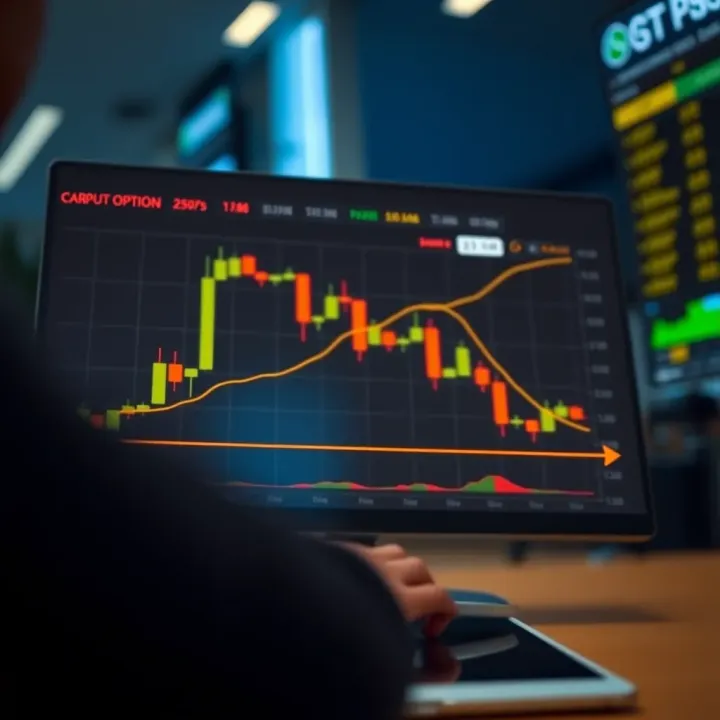
Explore option trading basics, strategies, market tips, and risks tailored for South African investors 🇿🇦. Make smarter investment choices today! 📈
Based on 15 reviews