

Understanding Forex Sessions and Trading Impact
🌍 Learn key forex sessions, their timings, and overlaps. Gain insight on market volatility and tailor your trading strategy to South African time and preferences. 📈
Edited By
Daniel Scott
Forex trading never really takes a full break. Because the market trades globally, it runs nearly 24 hours a day during weekdays, shifting through several trading sessions across different time zones. Understanding these sessions is key to spotting when the market is busy or quiet, which can greatly impact your trading decisions.
South African traders need to factor in our local time (SAST) to plan their trading activities carefully. Know that while it may be early morning here, the Sydney session is winding down, and as the European markets open, volatility might pick up.
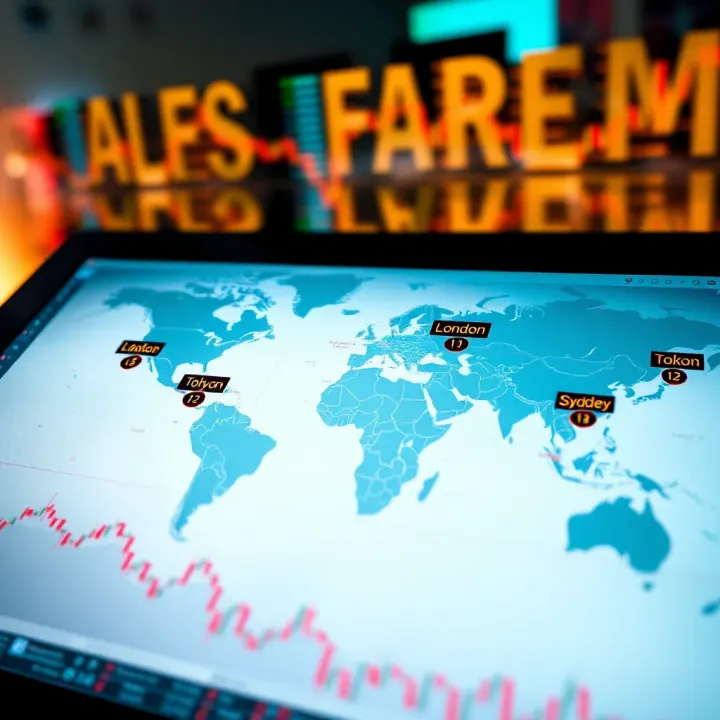
Here's the gist:
Time zones matter: Forex sessions correspond with the opening hours of major financial centres—Sydney, Tokyo, London, and New York.
Market liquidity varies: Typically, when sessions overlap, like London and New York, trading volumes and price movements become more active.
Session traits influence strategies: Some traders prefer the calmer Asian session for scalping, while others thrive on swings during the London-New York overlap.
Knowing when to trade and when to wait can make a significant difference to your results—timing can help you avoid choppy markets or unexpected surprises caused by major economic news releases.
By syncing your trading hours with market activity, you can better manage risk and spot good entry points. This also helps in conserving data and capital, which is always smart in South African contexts with concerns like data costs and market unpredictability.
In the following sections, we'll break down each major forex session, their unique features, and practical tips to help you make smarter trades while fitting your schedule as a South African trader.
Forex trading sessions mark the times when different currency markets around the world are active. Recognising these sessions matters because forex trading does not happen 24/7 in the same way across time zones–activity shifts as markets open and close in various financial hubs. This affects when you can expect better price movement, more buyers and sellers, and generally more trading opportunities.
A trading session refers to the period during the day when a particular geographical market is open to forex trading. The main sessions—Asian, European, and North American—are defined by business hours in cities like Tokyo, London, and New York. Each session brings its own market flavour influenced by economic events, trader types, and liquidity levels.
Knowing the timing and features of these sessions helps traders identify when market conditions may favour their strategies. For example, if you prefer scalping—the rapid buying and selling of currencies—then trading during overlapping sessions like London and New York might suit you better due to heightened liquidity and volatility. On the other hand, swing traders might look for the steadier moves common in the Asian session.
Forex is a global market without a centralised location, but it operates through interconnected regional markets bound by local time zones. For instance, the Asian session generally kicks off around 9 am in Tokyo, which corresponds to around 1 am South African time during standard time.
This means South African traders need to adjust their trading hours to align with these sessions if they want to participate when the market is lively. It also explains why liquidity and volatility cycle throughout the day, following the waking hours of major financial centres.
Adjusting for daylight saving time adds complexity. London and New York shift clocks seasonally, while South Africa remains on standard time year-round, requiring traders here to be mindful when planning trades.
Each session affects volatility and liquidity differently, shaping price behaviour. European and North American sessions tend to see higher liquidity and volatility as they involve major economies and active participation from institutional traders.
For example, during the London-New York overlap—which falls roughly between 3 pm and 6 pm South African time—you’ll often notice sharp price swings and wider spreads. This offers both risk and opportunity for traders looking for quick gains.
By contrast, the Asian session usually features lower volume but can still be crucial for trading pairs like USD/JPY or AUD/USD, which are influenced by economic data releases from that region.
Understanding these patterns allows you to plan your trades around expected market behaviour rather than trading blind. It’s also why South African traders often prefer certain sessions that align with local time and market activity.
Knowing when and where the market moves helps you better manage risk, spot trading opportunities, and align your approach to forex trading's rhythm.
The forex market operates 24 hours a day, but it’s not equally active all the time. Instead, trading volumes and volatility fluctuate depending on which regional session is open. Understanding these major forex trading sessions helps you pinpoint when and where the action is likely to be strongest, essential if you want to time your trades better and manage risks effectively.
What matters most is the timing and character of each session, defined by the economic centres that dominate them. This knowledge enables traders to adapt strategies to local market behaviours and liquidity patterns rather than trading blindly or during low-volume periods. From Johannesburg, for instance, adjusting your activity around overlapping sessions often means you can capitalise on swings from London or New York sessions without burning the midnight oil.
The Asian session kicks off the global forex day, typically running from 12 am to 9 am SAST. Key markets include Tokyo, Singapore, Hong Kong, and Sydney. Liquidity is generally lower here compared to later sessions, but currencies like the Japanese yen (JPY), Australian dollar (AUD), and New Zealand dollar (NZD) see the most activity.
What’s distinctive about this session is its steadier price movements and smaller ranges, making it suitable for traders who prefer less volatility or range-bound strategies. Traders focusing on the AUD/ZAR or NZD/ZAR pairs, for example, might find early trading hours attractive because of the session’s focus on Asia-Pacific currencies.
Economic releases from countries like Japan and China during this session can also trigger sharp moves, so paying attention to news calendars is key when operating in these hours.
Starting at 8 am and running until 5 pm SAST, the European session is the busiest and often the most volatile, due to the presence of major financial hubs like London, Frankfurt, and Zurich. This session sees heavy trading in the euro (EUR), British pound (GBP), Swiss franc (CHF), and also impacts other major currencies.
Liquidity peaks as the European session overlaps with both the Asian tail-end and the North American session opening. This overlap means tighter spreads and more significant price movements, presenting chances for day traders and scalpers to find good entry points.
South African traders should note that the London market has a particular influence on ZAR cross-currency pairs, given the UK’s historical and financial ties to South Africa. Movement in GBP/ZAR can be volatile during Brexit-related announcements or Bank of England policy decisions, for example.
The North American session runs from 3 pm to 12 am SAST, anchored by the New York market but also influenced by Toronto. It's crucial for the USD, Canadian dollar (CAD), and Mexican peso (MXN), but dollar pairs across the board respond to this session’s activity.
Volatility often spikes during the first few hours of this session, particularly when it overlaps with the close of the European session around 3 pm to 5 pm SAST. This period sees increased volume and often sharp trends as investors react to US economic data at 2 pm SAST and corporate news releases.
Given South Africa’s time zone, this session occurs in the late afternoon into the evening, suitable for those who prefer trading after typical work hours. Markets can remain active until midnight, with liquidity tapering off gradually.
Knowing the characteristics and timings of these sessions allows traders to plan entries, exits, and manage risk better. A well-timed trade during a highly liquid session can mean the difference between a successful trade and getting stuck in a stagnant market.
In short, aligning your trading strategy with the right forex session not only improves opportunity but also protects your capital by avoiding times when liquidity dries up or volatility jumps unexpectedly.
Trading sessions do not operate in isolation — their overlapping hours create unique conditions that impact market activity significantly. These overlap periods combine liquidity from two major financial hubs, often leading to higher volatility and trading volume. For traders in South Africa, understanding these overlaps helps identify windows of enhanced market opportunities or caution.
The overlap between the Asian and European sessions typically occurs between about 9 am and 11 am GMT (11 am to 1 pm SAST). This period sees participation from markets such as Tokyo winding down while London gears up. The influx of European traders increases liquidity in currency pairs involving the euro (EUR), British pound (GBP), and to some extent, the South African rand (ZAR) against Asian currencies.
This overlap often produces moderate volatility as liquidity rises, but it's generally less intense than the bigger European-North American overlap. For instance, traders might observe smoother price action in pairs like EUR/JPY or GBP/JPY compared to more erratic moves seen in the US session. This period suits range-bound trading strategies or gradual trend trades exploiting steady flows.
From roughly 1 pm to 4 pm GMT (3 pm to 6 pm SAST), the European and North American sessions cross paths — arguably the most dynamic phase in forex trading. London and New York represent two of the world’s largest financial centres, so their overlap commands substantial trading volume.
Currency pairs involving the US dollar (USD), euro, pound, and Canadian dollar (CAD) tend to see sharp price swings during this time. An example is the EUR/USD pair, which can experience sudden spikes when economic data from either the US or Europe is released simultaneously.
Traders enjoy greater opportunities for breakout and momentum trading here owing to active participation from hedge funds, banks, and institutional players. However, this also means risks of unexpected reversals are higher, making stop-loss placement and risk management essential.
Overlap periods provide greater liquidity and more trading signals, but they come with a double-edged sword. On one hand, tighter spreads and higher volume reduce slippage and improve trade execution. On the other, sudden news releases or large trades can cause sharp price movements.
For South African traders, aligning trading schedules to the European-North American overlap could offer higher profit potential—especially in pairs like USD/ZAR or EUR/ZAR—provided that risk controls are strictly in place.
Key considerations during these overlaps include:
Timing your trades: Avoid entering new positions just before major economic announcements.
Use limit orders wisely: To control entry and exit prices amid volatility.
Stay informed: Follow real-time news services and economic calendars that reflect session-driven data releases.
Besides, monitoring the overlap periods allows you to capitalise on momentum without being caught on the wrong side of sharp market swings.
In essence, knowing when sessions overlap and what to expect enables better decision-making and optimised trade timing in the forex market.
Planning your trading around forex sessions can make a significant difference in how effective and manageable your trading activities are. Different sessions bring varying levels of volatility and liquidity, so aligning your approach with when markets are most active or calm can help sharpen your strategy and manage risk better.
Selecting the right trading session depends largely on your personal style and goals. For example, if you’re a scalper who thrives on quick trades and high volatility, the European-North American overlap (about 3 pm to 7 pm SAST) offers plenty of price movements to exploit. Conversely, swing traders who prefer steadier trends might gravitate towards the Asian session, which tends to have lower volatility but opportunities for longer-term positions. Understanding your risk tolerance and trading objectives will guide which sessions suit you best.
South Africa operates on South Africa Standard Time (SAST), which is UTC+2 with no daylight savings. This places SA traders at a convenient overlap with both the European and African markets but means the North American session runs mostly overnight. For instance, the European session starts at 9 am SAST and runs until 5 pm, so most professional traders in SA find this session easy to trade during working hours. The North American session begins at 3 pm SAST and continues until about 12 am, which might require some late trading or adjusting your schedule accordingly.
For South African traders, planning trades around session start and end times can help capture optimal liquidity and avoid unnecessary risk during quiet market periods.
Proper timing reduces exposure to unexpected price swings. Let's say you trade USD/ZAR pairs – you’d want to focus on sessions when the USD or ZAR markets show more activity, such as during US or European market hours. Using stop-loss orders aligned with session volatility can protect your capital. Monitoring economic calendars that mark key announcements in each session also helps prevent being caught off-guard. For example, the release of US non-farm payroll figures at 3:30 pm SAST can stir volatility, so tightening your risk controls around that window is wise.
In short, syncing your trading plan with session characteristics and local timing enables more consistent execution and smarter risk management. Tailored planning transforms forex trading from guesswork to informed decision-making, especially in a market as active and complex as forex.
Tracking forex trading sessions is essential for traders looking to time their entries and exits effectively. The foreign exchange market runs 24/7, but liquidity and volatility vary noticeably with each session and their overlaps. Having reliable tools and resources helps navigate these fluctuations, especially for South African traders who must adjust for their time zone (SAST).
Forex clocks display the current open and close times of major trading centres like London, New York, Tokyo, and Sydney in real time. This gives immediate insight into which markets are active. Traders can spot overlaps quickly, for instance, London and New York sessions crossing, which usually means higher market liquidity and greater potential opportunities.
Many trading platforms such as MetaTrader 4 and 5, plus local brokers like IG or ThinkMarkets, include built-in forex session indicators. These visual cues on charts indicate active sessions and help plan trades accordingly. This practical feature enables South African traders to make moves without constantly checking world times or converting zones in their heads.
Economic calendars list scheduled news events and data releases, organised by country and time. They reveal exactly when key economic indicators such as South African Reserve Bank (SARB) announcements, US Nonfarm Payroll data, or European CPI figures appear.
Such information is critical because news releases often cause sudden price swings. By viewing events linked to particular forex sessions, traders can prepare or avoid uncertain market moments. For example, if SARB interest rate announcements fall during the JSE trading day but outside major global forex sessions, South African traders might anticipate lower volatility than during the US session overlap.
Mobile apps, like Investing.com or Myfxbook, offer notifications and alerts for session openings, news events, and price movements. These tools are handy for South Africans who trade part-time or from the move, keeping them informed without staring at a screen all day.
Setting customised alerts, such as when a session starts or a major report is due, helps avoid missing critical market windows. Also, some apps provide tailored news feeds focusing on forex markets relevant to your portfolio, ensuring timely decision-making.
Using the right tools to track forex sessions sharpens your ability to catch market moves at the right time and manage risk effectively.
By integrating forex clocks, economic calendars, and mobile alerts into your daily routine, you stay one step ahead. This approach removes guesswork and allows you to make the most of the 24-hour forex market, tailored to your trading style and South African time zone.
🌍 Learn key forex sessions, their timings, and overlaps. Gain insight on market volatility and tailor your trading strategy to South African time and preferences. 📈

📈 Learn how forex trading sessions affect activity and volatility in South Africa (SAST). Get tips to time your trades well around global market overlaps.
⚡ Master HFX trading in South Africa: grasp fast forex deals, key tech, and risks for savvy investors looking to move swiftly in volatile currency markets.
Learn what swap means in forex trading 💱, how it's calculated, and its impact on your costs and profits. Tips on managing swap fees for better trades.
Based on 12 reviews