

Understanding Derivative Functions: Basics and Uses
📊 Learn how to calculate and apply derivative functions to understand change in fields like engineering, economics, and physics with clear examples and rules.
Edited By
Amelia Morgan
Derivative products, often just called derivatives, are financial contracts whose value depends on underlying assets like shares, bonds, currencies, or commodities. In the South African financial markets, these instruments play a key role in managing risk and creating opportunities for investors and businesses alike.
Unlike buying a share outright, derivatives allow traders to speculate on price movements or hedge against potential losses without owning the actual asset. For example, if a maize farmer in the Free State fears a drop in grain prices by harvest time, they might use futures contracts to lock in a selling price, protecting their income despite market fluctuations.
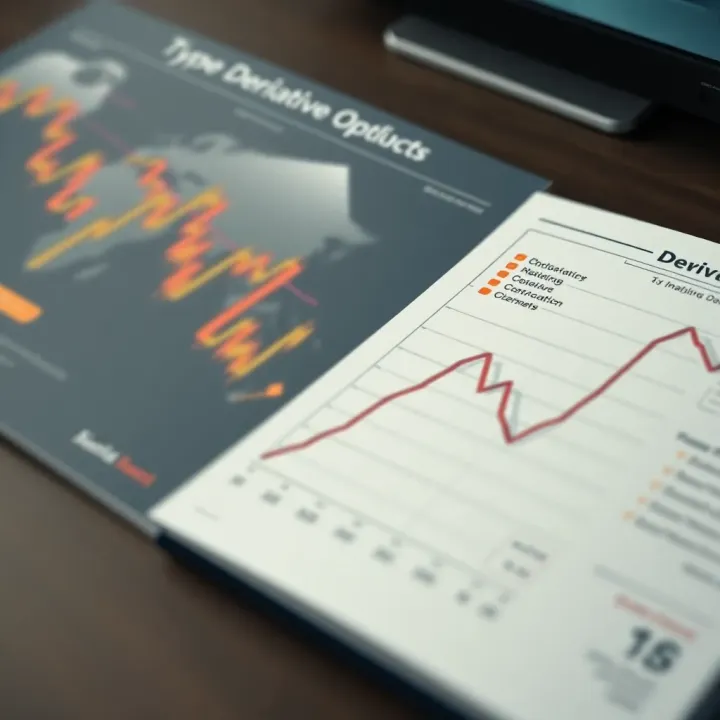
Common types of derivatives include:
Futures: Agreements to buy or sell an asset at a set price on a specified date.
Options: Contracts giving the right, but not the obligation, to buy or sell an asset within a time frame.
Swaps: Contracts to exchange cash flows, such as interest rates or currencies, at agreed intervals.
The benefits of derivatives include providing tools to manage risks like currency fluctuations, interest rate changes, or commodity price swings – issues South African exporters, importers, and producers frequently face. They also offer avenues for investors to diversify and gain exposure to different markets.
That said, derivatives can be complex and carry significant risk, especially when used for speculation without proper knowledge. This makes it crucial for traders and financial advisors to fully understand their features and potential impact.
Remember: Derivatives don't create value on their own; they redistribute existing risks and rewards. Used wisely, they can smooth uncertainties; misapplied, they can amplify losses.
In South Africa, markets like the Johannesburg Stock Exchange (JSE) offer a solid platform for trading derivatives, regulated to ensure transparency and fairness. Awareness of regulatory rules and recent trends — such as increased technology adoption and evolving product types — helps market participants stay ahead.
This guide will explore how derivatives work, their common varieties, practical applications, risks, and regulatory landscape, all with a focus on what matters most for investors and businesses here in Mzansi.
Derivative products play a key role in modern finance by offering a way to manage risk, speculate on price changes, or enhance returns. They are contracts whose value depends on an underlying asset, meaning their worth fluctuates with changes in that asset’s price or other characteristics. Understanding what derivatives are and how they work provides a solid foundation for traders, investors, and financial advisors alike.
A derivative is essentially a contract between two parties that derives its value from an underlying asset. This could be anything from commodities like gold or oil, to financial instruments such as stocks, bonds, currencies, or interest rates. For example, a farmer might enter a derivative contract to sell maize at a certain price months before harvest. This contract’s value hinges entirely on the maize market price at the agreed time, shielding the farmer from sudden price drops.
In practice, these contracts simplify buying or selling risk without dealing with the actual asset immediately. They can be traded on exchanges or over the counter, and their prices move in tandem with the underlying asset. This linkage allows parties to plan better and protect their financial interests against unpredictable markets.
Derivatives serve several roles in finance, but their primary purpose is risk management. Businesses and investors use them to hedge against price swings that could hurt profits or portfolios. Take a mining company worried about fluctuating copper prices; they may use futures contracts to lock in current prices, avoiding downside risk during their production cycle.
Beyond hedging, derivatives also offer chances to speculate on market moves without owning the underlying asset. Investors might use options to bet on a rise or fall in share prices, aiming for profits with limited upfront investment. Additionally, derivatives can help adjust portfolio exposure more flexibly, improving diversification and potential returns.
In South Africa, commodities stand out as a frequent underlying asset for derivatives. Gold remains a staple given the country’s rich mining history, alongside platinum and coal. Derivatives allow miners and traders to fix prices ahead, avoiding the wild price swings common in commodity markets. For instance, a gold miner could use a forward contract to sell an expected output at a specified rate, securing cash flow despite market fluctuations.
Similarly, oil derivatives are crucial for energy companies and industrial users to manage costs. A manufacturing firm reliant on petrol can use futures contracts to fix fuel prices, protecting against sudden hikes that would raise production expenses.
Stock and bond derivatives are popular among investors and funds aiming to fine-tune their strategies. Equity options, for example, let investors hedge against a stock’s downside without selling shares outright. Instead, they buy a put option granting the right to sell at a set price, providing insurance if the stock drops.
Bond derivatives help bondholders manage interest rate risks. Swaps or futures based on bond indices enable investors to adjust their exposure to changing yields, affecting portfolio values and income streams.
Currency derivatives are vital in a globalised economy, especially for exporters and importers. South African businesses trading with foreign partners often use currency forwards or options to lock exchange rates, avoiding unpredictability in the rand’s value. For instance, a Cape Town exporter shipping products to Europe might secure the rand-euro rate through a contract, preventing profits from being eroded if the rand weakens.
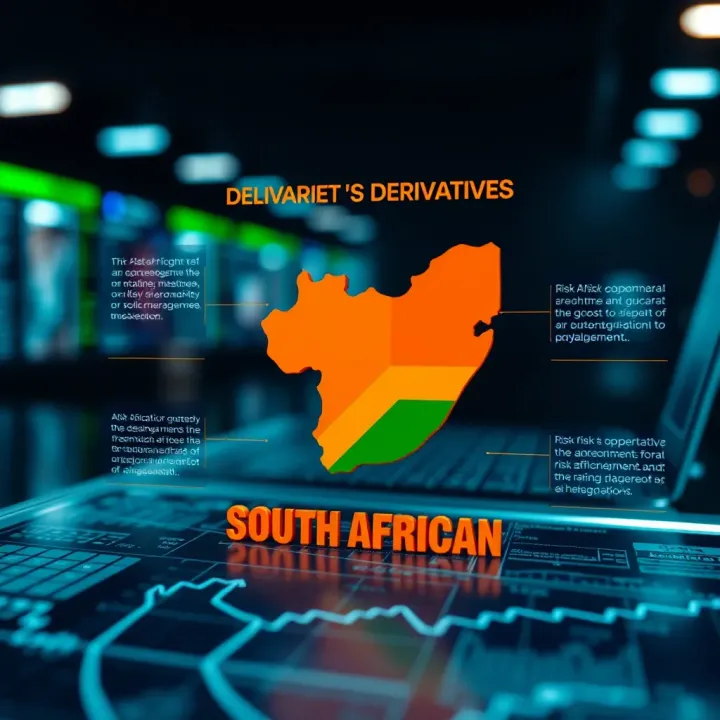
Interest rate derivatives, such as swaps, let companies manage borrowing costs. If a business has a variable-rate loan but expects rates to rise, it may enter into an interest rate swap to fix its payments. This stabilises cash flow and budgeting, crucial under South Africa’s fluctuating interest environment.
Understanding these core aspects helps any market participant grasp why derivatives matter. They represent practical tools for managing risk, seizing opportunities, and tailoring financial strategies around underlying assets of real economic significance.
Derivative products come in various shapes, each offering specific functions and uses for traders, investors, and businesses. Understanding the main types—futures, options, swaps, and forwards—is essential because they serve different purposes, carry distinct risks, and suit diverse market needs. They provide tools for managing risk, speculating on price movements, and enhancing portfolio strategies.
Futures contracts are standardised agreements to buy or sell an asset at a set price on a future date. These contracts trade on organised exchanges, meaning terms like quantities, delivery dates, and prices are predetermined. This standardisation provides liquidity and transparency, helping participants lock in prices and hedge against market volatility.
In South Africa, agricultural futures like maize and wheat contracts are actively traded on the Johannesburg Stock Exchange (JSE). These futures help farmers and millers manage unpredictable crop yields and price swings. Likewise, commodity futures for gold serve miners and investors seeking to hedge exposure or speculate on price changes.
Options give purchasers the right, but not the obligation, to buy or sell an asset at a specific price before expiry. A call option lets you buy, while a put option allows you to sell at the strike price. This flexibility enables users to customise risk-reward profiles.
On the JSE, options on equities and indices provide a way to hedge against adverse price moves or to profit from anticipated trends with limited upfront capital. For example, an investor concerned about a drop in a mining stock might buy a put option as insurance, while a speculator might buy a call option betting on a price rally.
Interest rate swaps involve exchanging cash flows based on fixed and floating interest rates. South African companies often use these swaps to manage exposure to fluctuating repo rates set by the South African Reserve Bank (SARB). By swapping a variable rate for a fixed one, a company secures predictable borrowing costs.
Currency swaps allow the exchange of principal and interest in different currencies, useful for businesses engaged in cross-border trade. A Durban importer dealing in US dollars might use a currency swap to lock in exchange rates and avoid the uncertainty of rand-dollar fluctuations.
Forwards resemble futures but are tailor-made contracts traded over the counter (OTC). Unlike futures, forwards are not standardised or exchange-traded, allowing more flexible terms but with counterparty risk.
South African exporters and importers often use forward contracts to fix exchange rates on sales or purchases, safeguarding against rand volatility. For example, a Cape Town wine exporter might enter a forward contract to sell dollars at a predetermined rate to secure profit margins.
Understanding the nuances between these main derivative types helps market participants select the right instruments based on liquidity needs, risk appetite, and objectives, especially within South Africa's unique economic context.
Derivative products serve various purposes for investors and businesses, offering tools to manage financial exposure, seek profit, and improve portfolio performance. These instruments let users address specific needs: from shielding against price swings to speculating on market movements or diversifying investment approaches. Understanding why derivatives matter can help traders, advisors, and companies make informed decisions aligned with their goals.
Protecting against price fluctuations is one of the main reasons companies and investors turn to derivatives. By locking in prices or rates today for future transactions, they reduce uncertainty that could affect profits or costs. For example, a South African farmer growing maize can enter a futures contract to sell the crop at a predetermined price before harvest. This shields the farmer from sudden price drops that might follow a bumper harvest or global commodity shifts.
In mining, companies exposed to volatile metal prices also use derivatives to stabilise revenue streams. A gold mine, for instance, might sell options to cap the downside risk if the price falls but still benefit from price increases. This practice helps them plan operational budgets and secure financing without fearing brutal swings in commodity values.
Some investors use derivatives to take positions based on price expectations without needing to own the actual asset. Traders might buy call options expecting a stock's price to rise or sell futures contracts if they anticipate a fall. This approach often requires less capital upfront compared to buying the underlying asset directly.
However, the potential for reward comes hand-in-hand with risk. Derivatives can magnify gains but also losses if markets move against the position. Speculators who misjudge trends or volatility may face significant financial setbacks, especially in leveraged contracts. Therefore, it's crucial to understand market conditions, exit strategies, and risk limits before engaging in speculative trades.
Derivatives also play a role in diversifying portfolios, adding exposure or protection that traditional asset classes may not offer. For instance, an investor holding a South African equity fund might use options to hedge against a market downturn or employ swaps to gain foreign currency exposure without selling local holdings.
Local investment funds sometimes incorporate derivatives to improve returns or manage risk on behalf of clients. For example, some unit trusts use currency forwards to hedge offshore investments against rand fluctuations, preserving value when the rand weakens. Others may employ futures contracts on interest rates to adjust the duration of bond portfolios effectively. These strategies help funds navigate South Africa's sometimes volatile financial environment and help investors meet their financial objectives.
Derivatives, when used wisely, are powerful tools that can protect, speculate, and diversify — but they demand careful handling and an understanding of the risks involved.
Derivative products, while useful, carry their share of risks that every trader or investor in South Africa should know about. Understanding these risks helps you manage potential downsides better and make informed decisions, whether you're hedging exposures or speculating.
Volatility and price unpredictability play a significant role in derivatives. Prices of the underlying assets can swing dramatically due to factors like geopolitical events, economic data releases, or sudden shifts in market sentiment. For example, commodity derivatives linked to gold or platinum may experience sudden price jumps if global demand changes or mining strikes occur locally. Such volatility means derivatives can unexpectedly amplify losses as much as gains.
Beyond market swings, there's counterparty risk particularly in over-the-counter (OTC) derivative trades. These are contracts negotiated directly between two parties, like currency swaps, rather than on a regulated exchange. The risk is that the other party might default on their obligation. For instance, a Johannesburg-based company entering a bespoke interest rate swap with a small financial institution must be wary; if that institution faces financial troubles, the company could get stuck with losses or difficulty enforcing the contract.
Grasping contract terms thoroughly is vital. Derivatives often come with detailed legal language specifying payment calculations, timing, and conditions under which the contract ends or rolls over. A local investor unfamiliar with these might misinterpret the terms, leading to unexpected costs or obligations. For example, misunderstanding margin requirements in futures contracts can force an investor to inject more cash than anticipated, squeezing liquidity.
The potential for mispricing and misuse is another concern. Mispricing can happen when valuation models fail to account for local market nuances or when insufficient data distorts pricing. Some derivatives might also be used inappropriately, such as taking excessive speculative positions beyond one's understanding or financial capacity, which can escalate losses quickly. This makes education and advice crucial before engaging with complex products.
South Africa's derivatives market operates under oversight from institutions like the Financial Sector Conduct Authority (FSCA) and the Johannesburg Stock Exchange (JSE). Regulations on derivatives trading ensure fair practices, transparency, and market integrity. For example, exchange-traded derivatives are subject to mandatory clearing to reduce counterparty risk, while OTC derivatives must comply with requirements like reporting and capital adequacy.
For compliance requirements, participants need to follow set rules around disclosures, record-keeping, and licensing. Brokers and dealers must hold appropriate licences and report trades accurately. Non-compliance can lead to penalties or suspension from trading. Understanding these obligations helps traders avoid regulatory pitfalls and contributes to smoother market functioning.
Derivatives carry promise but also pitfalls — knowing the risks and the rules is the best way to use these financial tools confidently and responsibly.
In summary, while derivatives help manage risk and open profit avenues, market swings, counterparty defaults, complex contracts, mispricing, and regulatory requirements all require careful attention. With proper understanding and vigilance, you can navigate these challenges in South Africa’s evolving financial environment.
Understanding the latest trends in derivative products is vital, especially for traders, investors, and financial advisors in South Africa. These products don't just evolve in isolation; their shifts affect risk management, trading efficiency, and investment opportunities. Staying informed about how technology and sustainability concerns shape derivatives helps you navigate the market with sharper insight.
South African exchanges and brokers have embraced electronic trading platforms, making derivatives more accessible and transparent. These platforms allow real-time price discovery and faster execution compared to traditional voice or manual trades. For instance, the Johannesburg Stock Exchange (JSE) hosts electronic trading for futures and options on local equities and indices, enabling quicker adjustments to portfolios during volatile markets or Eskom-induced load-shedding.
One practical benefit is that electronic platforms reduce operational risks and often lower transaction costs, making derivatives more attractive for smaller investors and local businesses. They also facilitate better liquidity by connecting multiple market participants efficiently.
Blockchain technology and smart contracts are creating a ripple effect in derivatives markets worldwide, and South Africa is catching up. Blockchain offers an immutable ledger for trade records, reducing counterparty risks inherent in over-the-counter (OTC) derivatives. Smart contracts automatically enforce contract terms, cutting down settlement delays and paperwork.
A real-world example is certain commodity trading houses experimenting with blockchain to track contracts for future delivery of agricultural products. This approach ensures all parties meet their obligations promptly, helping farmers and buyers avoid disputes over quality or delivery. This technology is still maturing but holds promise for making derivatives simpler and more secure in the local context.
Environmental, Social, and Governance (ESG) factors are increasingly shaping the financial sector worldwide, and derivative products are no exception. Green derivatives are designed to support environmental goals, such as reducing carbon footprints or financing renewable projects. In South Africa, with its ongoing energy and environmental challenges, these instruments provide a tool for companies to hedge against regulatory risks related to carbon emissions.
For example, futures contracts linked to carbon credits or renewable energy certificates help companies manage compliance costs or investor expectations around sustainability. This is especially relevant given South Africa’s commitment to lowering greenhouse gas emissions under international agreements.
Investor demand for responsible products is on the rise, reflecting growing awareness of social and environmental impacts. Funds and individual investors increasingly seek derivatives linked to ESG benchmarks or sectors that promote sustainable development.
This trend pressures financial institutions to innovate and offer derivatives that match responsible investing strategies. It creates avenues for hedging exposure to companies or industries lagging in ESG compliance or for speculating on growth sectors like clean energy. For South African market participants, keeping an eye on ESG-linked derivatives can provide fresh opportunities while aligning investments with ethical values.
Being aware of these trends lets you adapt your investment tactics, balance risk, and potentially tap new markets in an evolving financial environment.
In summary, technology and ESG concerns are shaping how derivatives are traded and used. Electronic platforms and blockchain can make trading smoother and safer, while sustainable derivatives open routes to responsible investing aligned with South Africa’s economic and environmental goals.
📊 Learn how to calculate and apply derivative functions to understand change in fields like engineering, economics, and physics with clear examples and rules.

🤖 Explore no loss derivative bots in trading: how they operate, their benefits, risks, and impact on South African markets for savvy investors.
Explore synthetic trading in South Africa 🇿🇦: learn how to mimic asset payoffs, build strategies, weigh risks, and navigate regulations for smarter investing 💼📊.
Explore the Five ERs framework 📘 and learn how each element applies in real-life scenarios. Gain practical tips to understand and use these key principles effectively.
Based on 12 reviews