
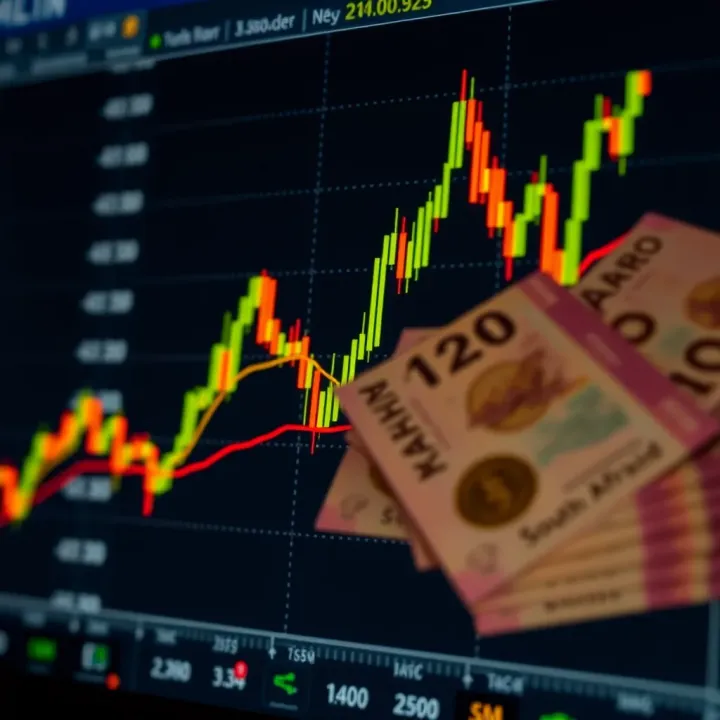
Understanding Forex Trading for South African Traders
🌍 Thinking of forex trading in South Africa? Learn how to trade key currency pairs, pick reliable brokers, use top platforms, and manage risk smartly with local tips. 📉📈
Edited By
Henry Lawson
Margin in forex trading refers to the amount of money a trader must set aside to open and keep a position active. Think of it as a security deposit that ensures you can cover potential losses. This setup lets traders control larger currency volumes than their actual capital, thanks to leverage.
For example, if you have R10,000 in your trading account and your broker requires a 1% margin to open a position, you effectively control R1,000,000 worth of currency. This means you can amplify gains, but losses can also mount quickly if you don't manage your risk properly.

Margin isn’t a cost or a fee; it’s collateral held by your broker to support open trades. It’s essential to understand how much margin you need and maintain it to avoid being forced to close positions prematurely.
In South Africa, margin trading is particularly popular as it allows traders to maximise limited capital in a market that moves fast. However, the risk of margin calls—when your account falls below the necessary fund level—requires careful monitoring.
Key points about margin in forex:
Margin requirement: The percentage of the total trade value you must have in your account.
Leverage: The ratio showing how much more you can control relative to your deposit; for instance, 1:100 means R1 margin controls R100.
Free margin: Funds available to open new positions or absorb losses.
Margin call: Broker’s request for you to add funds or close trades when equity falls below margin requirements.
Understanding these elements helps you trade smarter, knowing when you're overexposed or safe. For instance, trading during loadshedding can be risky if your connection drops and opens positions aren’t properly managed.
To sum up, margin is the backbone of forex trading, giving you buying power beyond your cash but demanding solid risk management. Always check your broker’s margin rules, and don’t stretch your exposure beyond what your budget can handle.
Understanding margin is fundamental for anyone trading forex, as it directly impacts your ability to open and maintain trading positions. Margin is essentially the collateral a trader puts down to control a larger position size than their actual capital would normally allow. This system offers the practical benefit of boosting potential returns, but also introduces risks if not managed carefully.
Think of margin as a security deposit required by your broker to cover potential losses. When you open a position, you don’t need to pay the full value; instead, you commit a fraction of the total trade amount. For example, if you want to control R100,000 worth of EUR/USD with a 1% margin requirement, you need to have R1,000 in your account as a deposit. This deposit acts as a buffer while your trade is open.
Your capital is the actual money you have deposited in your trading account, while margin is a portion of that capital set aside to keep your trades active. It’s important to understand that margin isn’t a fee or cost; it remains part of your capital but locked as collateral. For instance, if you have R10,000 in your account and open trades requiring R2,000 margin, you still own the full R10,000, but R2,000 is reserved to support those trades.
When you place a trade, the broker sets aside the required margin to cover that specific position. This lets you open trades larger than your deposit without having to pay the full amount upfront. For example, a trader with R5,000 in the account can control R50,000 in currency value if the margin requirement is 10%. This access to larger positions can increase profits but also means losses could exceed what you initially put in if the market swings against you.
Brokers determine the margin requirement based on the currency pair and the level of risk involved. These requirements can vary — major pairs like USD/ZAR might have a lower margin requirement compared to more volatile or exotic pairs. It’s crucial to check your broker’s terms since a higher margin requirement means you need more capital upfront for the same trade size. Many South African brokers provide clear margin metrics on their trading platforms to help traders manage their exposure wisely.
Always monitor your margin closely; falling below the required level can trigger a margin call, closing your positions prematurely and potentially causing unexpected losses.
By grasping how margin operates and differs from your total capital, you can better plan your trades, allocate funds more effectively, and avoid surprises that catch many traders off guard.
Understanding the link between margin and leverage is key for anyone trading forex. Margin is the actual security you provide to open a trade, while leverage lets you control a much larger position than the money you put down. Without margin, you cannot access leverage, which means margin acts as the foundation for magnifying potential gains — but also losses.
Leverage means borrowing funds from your broker to increase your trading power. Imagine you have R1,000, but with a leverage ratio of 100:1, you're able to control R100,000 in the market. This ability to trade bigger positions with less upfront cash can boost your returns significantly, especially in a market like forex, which moves in small increments.

However, it’s not free money. The borrowed amount must be maintained through margin, and if the market turns against you, losses also get amplified, eating into your margin and potentially triggering a margin call.
Common leverage ratios in the forex market vary by broker and regulation but typically range from 10:1 up to 500:1. For example, a 50:1 leverage ratio means you only need to put down 2% of the position’s total value as margin. Brokers in South Africa often cap leverage due to FSCAs regulations to help manage trader risk, typically around 200:1 or lower.
Calculating required margin is straightforward but crucial. Given a trade size, the margin required depends on the leverage allowed by your broker. For instance, if you want to buy one standard lot (100,000 units) of EUR/USD at an exchange rate where 1 euro equals R18, the total position is R1.8 million. With 100:1 leverage, you only need 1% of this, which is R18,000, to open the position. This R18,000 is your margin.
Leverage directly affects margin levels — higher leverage requires less margin upfront but means a thinner buffer against price swings. With increased leverage, the margin can be consumed quickly if the market moves against you, increasing the risk of margin calls. Lower leverage reduces this risk but ties up more capital.
Remember: Higher leverage isn't always better. It’s about finding the right balance between risk and opportunity, especially considering South African traders may face volatile market conditions and must manage their margin carefully.
By recognising how leverage ramps up your exposure and how margin is the required stake your broker holds, you can better manage trade sizes and avoid unexpected losses. Always consider the leverage your broker offers and understand the margin implications before diving in.
Understanding how to calculate margin and recognising what triggers a margin call are fundamental for anyone trading forex. These concepts help you manage your trading capital wisely, avoid unexpected losses, and keep your positions open without surprises.
Margin requirements depend heavily on the size of your trade—referred to as the "lot size"—and the currency pair you are trading. A standard lot typically equals 100,000 units of the base currency. For example, trading one standard lot of EUR/USD means you are controlling 100,000 euros. Mini lots (10,000 units) and micro lots (1,000 units) allow for smaller trade sizes, which in turn require less margin.
Since forex pairs involve two currencies, the margin calculation also depends on your account currency and the pair you're trading. If your account is in South African Rand (ZAR), but you trade EUR/USD, you will need to convert the margin to ZAR based on the current exchange rate.
Say you want to open a 1 standard lot position in EUR/USD and your broker requires a 1% margin. The value of the trade amounts to 100,000 euros. At a 1% margin, you need 1,000 euros as collateral. If the EUR/ZAR exchange rate is R18, your margin in ZAR would be R18,000 (1,000 x R18).
For a smaller trade, such as a mini lot with a 0.5% margin requirement, on USD/ZAR with a rate of R15, the calculation would be 10,000 USD x 0.5% = 50 USD, then converted to R750 (50 x 15).
These calculations demonstrate how lot size, currency pair, and margin requirements shape the funds you must set aside to maintain your open positions.
Your margin level is the ratio between your equity (account balance plus or minus any unrealised profits or losses) and the used margin. Brokers set specific margin levels and stop-out thresholds to protect both parties. For example, if your margin level drops to 100% or below, the broker will usually issue a margin call, warning you to deposit more funds or close positions.
Stop-out levels are lower thresholds where the broker can start closing your losing positions automatically to prevent further losses. This might happen if your margin level falls to 50% or less, but the exact figure differs per broker and account type.
When a margin call occurs, you have limited options: add more funds to restore your margin levels or close some positions to reduce the required margin. Failure to act often results in the broker closing losing trades, starting usually with the largest positions, to free up margin and keep your account solvent.
This automatic closure protects you from going into negative balance but can cause losses if the market moves quickly—in volatile conditions, your trades might close at less favourable prices. Staying vigilant and monitoring margin levels can prevent getting caught off guard.
Proactively calculating margin requirements and understanding margin calls enables traders to keep control over their positions and capital. These mechanics form the backbone of disciplined forex trading.
By grasping these details, you’ll be able to trade forex more confidently, knowing exactly how much of your funds are tied up and when to take steps to protect your capital.
Trading on margin in the forex market can boost your buying power, but it also raises the stakes significantly. Understanding the risks involved is vital for any trader who wants to protect their capital and avoid nasty surprises. Leverage magnifies not only potential gains but also losses, meaning careless use of margin can quickly lead to big financial damage.
Leverage acting like a double-edged sword is a key risk when trading on margin. When you use leverage, you control a larger position with a smaller amount of your own money. That sounds good until the market moves against you. For example, if you open a position worth R100,000 but only put up a R2,000 margin with 50:1 leverage, a 2% adverse move wipes out your capital completely. The loss is magnified because you’re trading much more than what you actually own.
Take the rand-dollar pair as a practical example. If you’re trading with 100:1 leverage, a seemingly small currency swing of 1% might mean your account loses most of its margin. Without a solid risk management plan, traders can be wiped out even with tiny market fluctuations. It’s not unheard of for inexperienced traders to end up in debt if they don’t keep a close eye on their exposure.
To keep losses manageable, most traders use stop-loss orders. These are automatic exit points set at specific price levels to cap the downside on a trade. Say you buy euros against the rand, but the rand unexpectedly strengthens. A stop-loss closes your position before losses snowball, acting as a safety net. While stop-loss orders can’t eliminate risk entirely, they’re crucial tools for preserving capital.
Aside from stop-losses, monitoring margin levels is essential. Your broker will usually issue margin calls if your account equity falls below required levels, forcing you to add funds or close trades. If you ignore margin calls, positions get liquidated, often at unfavourable prices. Regularly checking your margin utilisation—especially during volatile periods like the rand’s reaction to local political news—helps avoid forced liquidations and staying in control.
Effective margin management means being proactive: set sensible stop-losses, watch your margin closely, and never overextend your leverage. This keeps you in the game longer and protects your trading funds.
In short, margin trading can amplify your returns but exposes you to amplified risks. Using risk management tools and staying alert to margin requirements goes a long way in trading forex sensibly in South Africa’s choppy market conditions.
Trading on margin demands disciplined practices to avoid unnecessary risks and protect your capital. Getting it right isn't just about picking the right trades – it’s also about managing how much leverage you take on, and keeping tabs on your margin at all times. Without solid habits here, losses can stack up quickly.
A common trap for new traders is jumping in with high leverage to amplify potential gains. While the lure of turning a small deposit into a significant position is tempting, inexperienced traders often underestimate the risk. It’s smarter to start with low leverage ratios—say, 5:1 or 10:1—and only increase as you become more confident and understand how margin calls work. For instance, a trader starting out with R10,000 in capital using 5:1 leverage controls R50,000 worth of currency. That’s substantial but doesn't overextend their risk exposure.
Experienced traders might push leverage higher but usually balance that with stringent risk controls. The key here is matching your leverage to your risk appetite and skill level rather than chasing bigger positions just because the broker offers them.
Using too much margin can quickly backfire. When margin usage creeps above, say, 50% of your available margin, you're flirting with danger. Shrinking buffers mean less room for market swings — and forex can be notoriously volatile. Imagine holding a position using 80% of your margin; a slight adverse move could trigger a margin call, forcing you to close positions at a loss.
Keeping margin use conservative shields your account from unexpected moves, especially during volatile periods like economic announcements or political events. Some brokers display margin utilisation rates to help you see if you're overexposed — keeping that figure moderate is a safeguard many successful traders swear by.
Forex trading isn’t a set-and-forget affair. Markets move fast, and your margin status can change quickly if the currency pair shifts against your position. Checking your margin levels regularly—several times a day, if possible—can alert you to rising risks. This practice helps you adjust positions before hitting critical thresholds.
For example, if your account’s margin level drops below 100%, it’s a sign your capital no longer covers your positions fully. Responding early by closing or reducing trades can prevent forced liquidation and preserve your trading ability.
Most South African brokers like IG Markets, ThinkMarkets, and Pepperstone offer dashboards that clearly show your margin levels, open positions, and potential margin calls. These platforms often include alerts you can set to warn when margin hits a certain level. Using these tech tools gives you a hands-on approach to managing risk and helps avoid surprises.
Some platforms even let you simulate margin use on hypothetical trades, which can be an excellent way to learn without risking real money. Make a habit of leveraging these resources—they’re designed to keep you informed and in control.
Staying practical about margin means respecting its power and limits. With the right leverage, vigilant monitoring, and good use of broker tools, you keep your trading realistic and your capital safer.
🌍 Thinking of forex trading in South Africa? Learn how to trade key currency pairs, pick reliable brokers, use top platforms, and manage risk smartly with local tips. 📉📈

📈 Learn how forex trading sessions affect market hours and your strategy 🌍 Tailored tips for South African traders to navigate global time zones effectively.
💱 Learn forex trading basics, key terms, and safe start tips in South Africa. Build confidence with practical strategies & risk management for local markets.

📈 Learn how forex trading sessions affect activity and volatility in South Africa (SAST). Get tips to time your trades well around global market overlaps.
Based on 14 reviews